
Window Screen Cleaning in the Imperial Valley: When to Clean, Repair or Replace a Screen
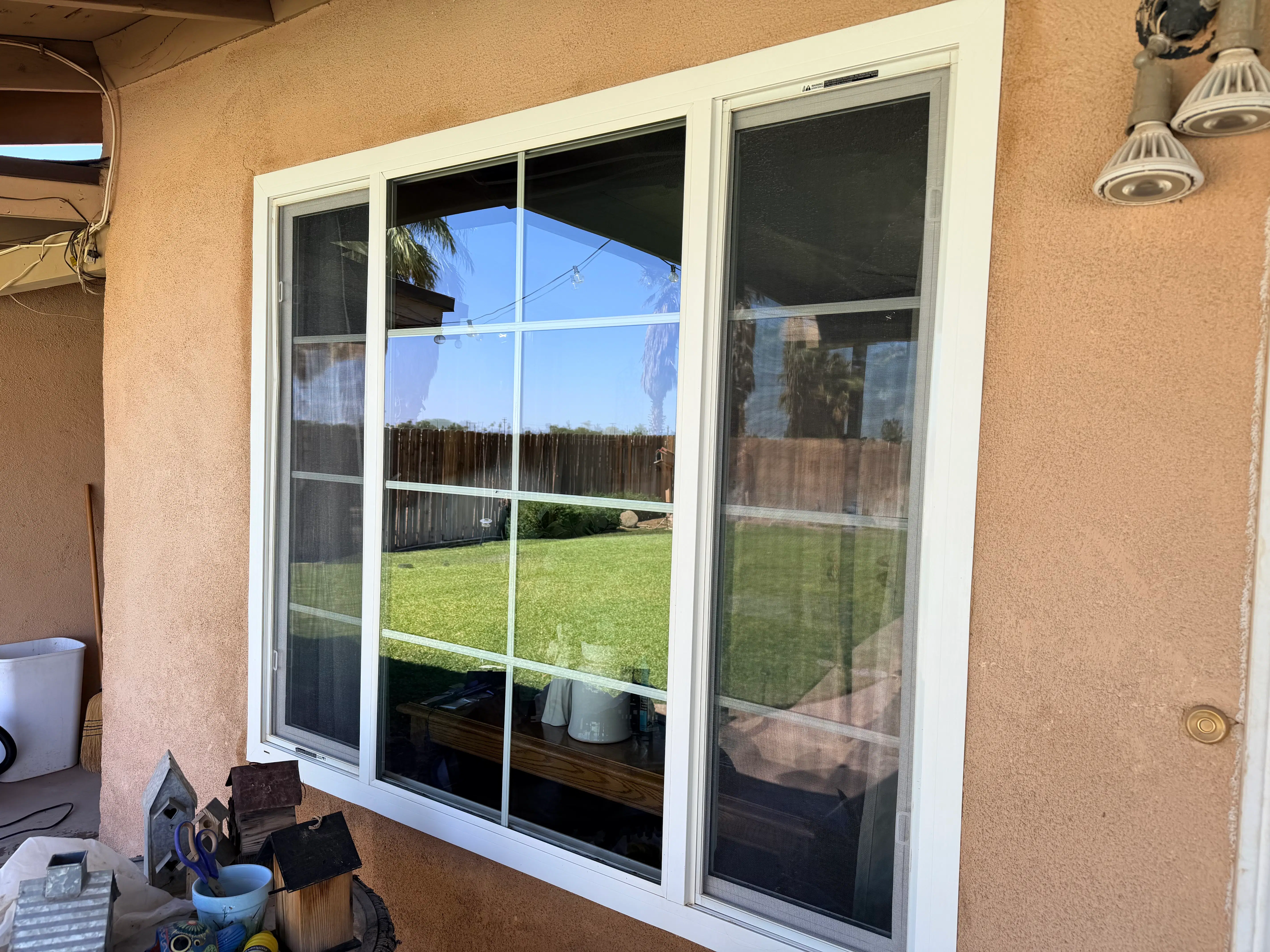
Yes, many window screens can be cleaned rather than repaired or replaced. The deciding factor is the condition of the mesh and frame.
In the Imperial Valley, screens collect fine desert dust and agricultural dust. Irrigation water, hose spray and rain can also leave mineral residue behind. Over time, that buildup can make the screen look gray, cloudy or crusty and can make the view seem hazy even when the glass itself is not the main problem.
The practical answer is:
- Clean the screen when the mesh is intact and the frame still fits correctly.
- Repair or rescreen it when the mesh, spline or a small part of the frame is damaged.
- Replace it when the frame is badly bent, corroded or no longer holds the screen securely.
A screen cleaning service can remove accumulated surface dirt, loose dust, cobwebs and some residue. Cleaning cannot restore mesh that has stretched, torn, become brittle or pulled away from the frame.
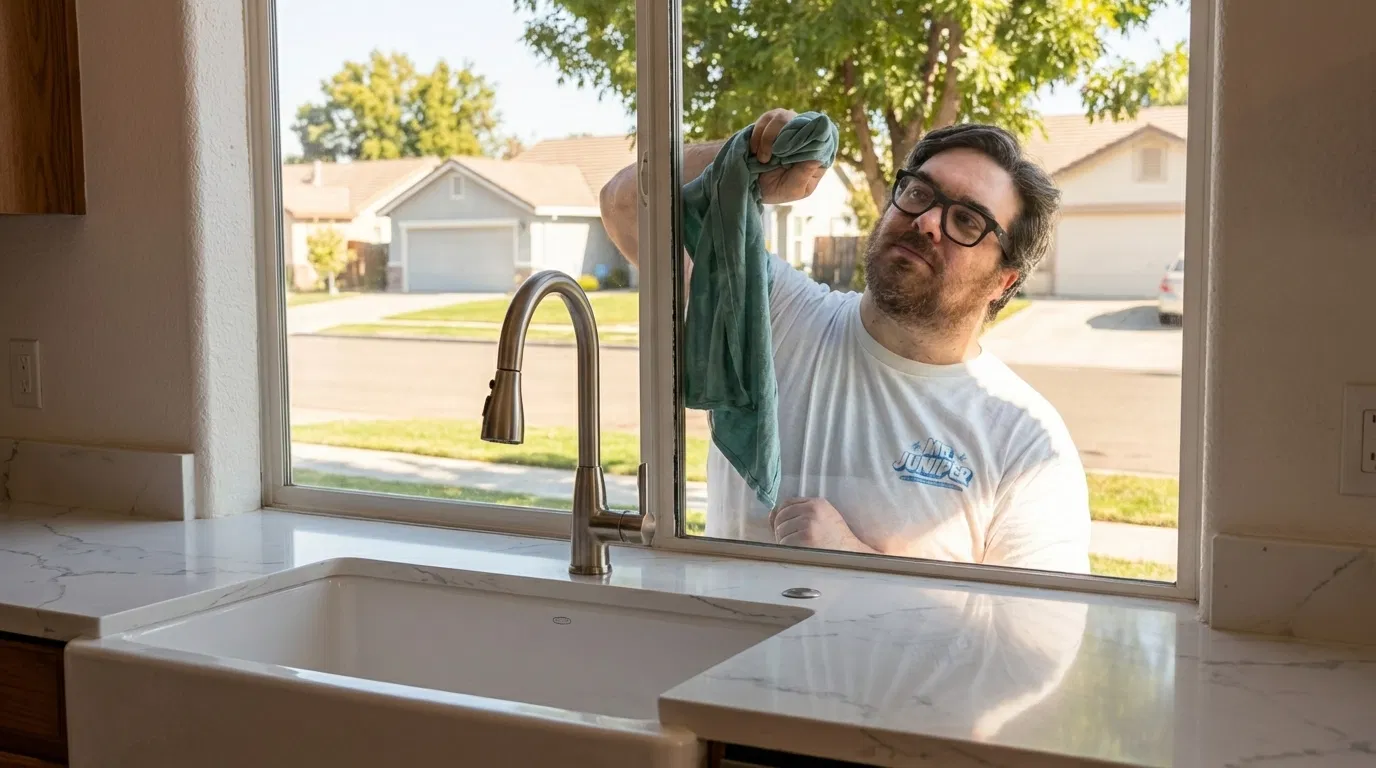
When screen cleaning is enough
Cleaning is usually the appropriate first step when the screen is dirty but structurally sound.
Look for these signs:
- The mesh has no holes, major tears or badly frayed edges.
- The mesh remains reasonably tight instead of sagging across the frame.
- The spline, the flexible material holding the mesh in the frame groove, appears continuous.
- The frame is straight and its corners are not separating.
- The screen sits properly in the window opening.
- A sliding screen door moves without catching, dragging or coming out of its track.
Routine cleaning generally involves removing loose dust, washing the mesh and frame carefully, rinsing away loosened soil and allowing the screen to dry before it is put back in place. The exact approach depends on the screen’s condition and material.
Light residue may come off during a careful cleaning. Heavier mineral buildup may need a closer assessment, particularly if it has bonded to the frame or mesh. A screen should not be treated as though it were glass; aggressive scrubbing or unsuitable chemicals can damage the mesh.
What screen cleaning can, and cannot, fix
It helps to separate dirt from physical damage before deciding what service is needed.
Cleaning can address
- Fine desert and agricultural dust
- Loose dirt and cobwebs
- Grime collected in the mesh
- Surface residue on the mesh and frame
- Dust around the screen edges, depending on access and condition
Cleaning does not fix
- Torn, punctured or blown-out mesh
- Stretched or sagging mesh
- A spline that no longer holds the mesh securely
- Bent, twisted or separated frames
- Corroded frame sections or hardware
- A worn sliding door screen that no longer operates smoothly
- Mesh that has become brittle from sun and heat exposure
If the screen still looks hazy after cleaning, the glass, frame, track or sill may also need attention. A dirty screen and dirty glass can overlap visually, so inspecting both surfaces helps identify the actual source of the problem.
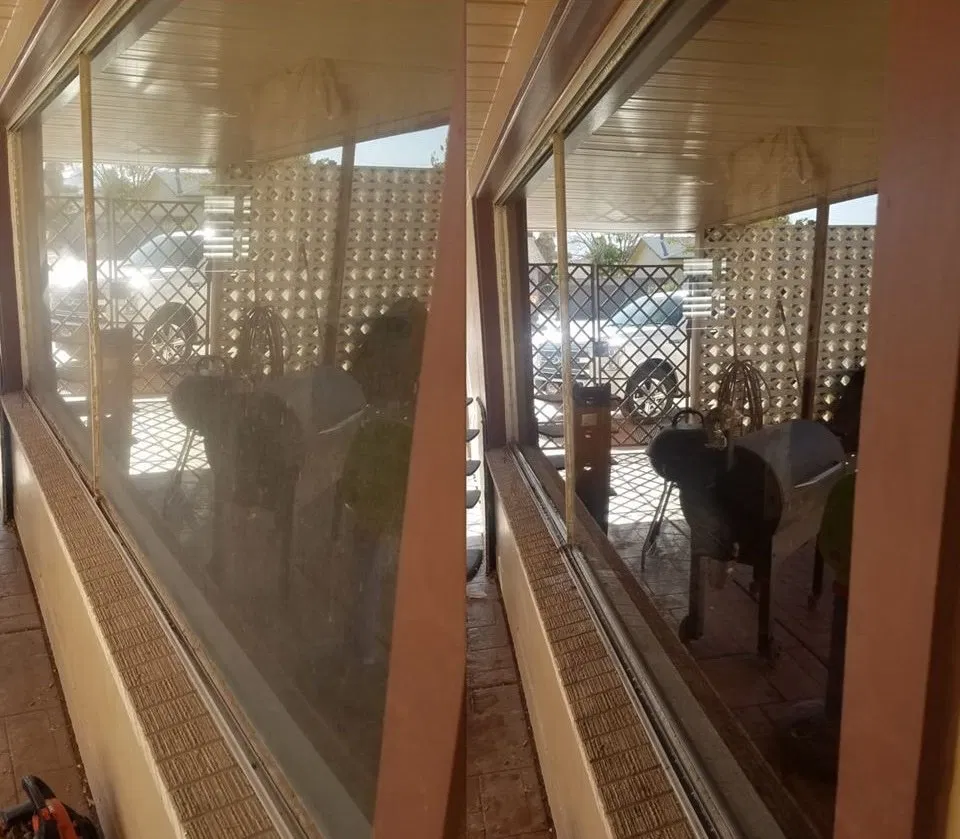
When to repair or rescreen a window screen
Repair is often appropriate when the frame is still usable but the mesh or a small component has failed.
Common examples include:
- A small tear or hole in otherwise sound mesh
- Mesh that has pulled loose along one edge
- A section of spline that has lifted or deteriorated
- A damaged corner with straight frame rails
- A screen that needs new mesh installed in its existing frame
- A sliding screen door that needs attention but still has a serviceable frame
Rescreening means installing new mesh in an existing frame. It can be a practical option when the frame is square, the corners are sound and the frame groove can still hold the spline.
A technician should inspect the screen before recommending this option. If the frame is too bent, corroded or undersized to hold new mesh properly, rescreening may not be the right solution.
When replacement makes more sense
Replacement may be the better path when the screen’s basic structure is no longer dependable.
Consider replacement when:
- The frame is badly bent or twisted.
- Multiple corners are cracked or separating.
- Corrosion has weakened the frame or hardware.
- The mesh is brittle, heavily stretched or damaged in several areas.
- The screen does not fit the opening correctly.
- A sliding screen door repeatedly catches, drags or comes out of alignment.
- Previous repairs have left the screen uneven or unable to operate properly.
The goal is not to replace a screen simply because it is dirty. The goal is to match the service to the condition: cleaning for buildup, repair or rescreening for localized damage, and a new screen when the existing frame or fit is no longer reliable.
What a professional screen cleaning service checks
When screen work is handled during a cleaning visit, the inspection should go beyond whether the mesh looks dirty.
A technician may check:
- Mesh tension: Is the mesh tight, or has it stretched and sagged?
- Spline: Is the spline continuous and seated securely in the frame groove?
- Corners: Are the corners intact, square and connected?
- Frame condition: Is the frame straight, stable and free of significant corrosion?
- Fit: Does the screen sit correctly in the opening without excessive gaps or wobbling?
- Smooth operation: For sliding screens, does the panel move and close properly?
- Glass and surrounding areas: Is the haze coming from the screen, the glass, the track or the sill?
This inspection helps avoid paying for cleaning when the real issue is damaged mesh or a failing frame. It also helps avoid replacing a screen that only needs careful cleaning.
Mr. Juniper provides screen repair, rescreening and new screen service for residential window screens and sliding screen doors. Screen work can be handled as a standalone service or coordinated with a window cleaning visit, depending on the scope and condition.
Simple screen care between professional visits
You do not need specialized equipment to keep screens from collecting unnecessary buildup.
For light maintenance:
- Remove the screen only if it can be done safely without forcing the frame.
- Use a soft vacuum-brush attachment or a soft, dry brush to remove loose dust first.
- Wash with mild soapy water and a soft cloth or soft brush.
- Rinse carefully with clean water.
- Let the screen dry fully before reinstalling it.
- Wipe dust from the sill and track before putting the screen back.
- Avoid pressure washers, stiff brushes and harsh chemicals.
- Do not force a screen that is stuck, bent or difficult to remove.
- Do not scrub aggressively if the mesh is brittle or already pulling away from the frame.
Dry dust removal before washing is especially useful in the Imperial Valley. It helps prevent loose dust from turning into muddy residue across the mesh.
If you notice a tear, loose spline or bent corner during routine care, stop before making the damage worse. A screen that is forced back into place can become more difficult to repair.
Screen cleaning and residential window cleaning in one visit
Screens and glass are separate surfaces, but they affect the same view. Cleaning only the glass may leave a hazy screen in place, while cleaning only the screen may not address mineral residue or dirt on the glass.
For that reason, homeowners often consider screen work when arranging residential window cleaning. Coordinating the work can make it easier to inspect the screen, clean the surrounding window area and identify whether the remaining haze is on the mesh or the glass.
If you are deciding how often to schedule the broader service, this guide to window cleaning frequency in the Imperial Valley explains how local dust, agricultural residue and mineral buildup can affect a home’s maintenance needs.
When the haze is on the glass rather than the screen, water quality and mineral residue may also be relevant. This explanation of DI water and why it matters provides additional background.
The bottom line
A cloudy screen does not automatically need to be replaced. Start by checking whether the mesh is intact, the spline is secure, the frame is straight and the screen fits and operates correctly.
- Dirty but sound: clean it.
- Localized mesh, spline or corner damage: repair or rescreen it.
- Bent, corroded, badly aged or poorly fitting: replacement may be the better option.
Next step
Learn about Mr. Juniper’s screen repair and rescreening service to see which option may fit your screens, or request a quote for the condition of your specific window screens.